

How Long Does a Root Canal Take?
When you know you need one, you may be wondering: how long does a root canal take? Tooth health is important to stay on top of, but, if you’ve ever experienced an infected tooth, then you know that the sooner you get a root canal procedure the better. The affected tooth in need of root canal treatment will immediately make itself known with drastic tooth pain. Thankfully, a root canal can help alleviate the problem quickly and help you get back to a more comfortable bite.
But, before going in, you may wonder what all a procedure includes. West Wind Dental is here to help you better understand the root canal procedure for a more comfortable, easy visit.
Determine Infection Severity
Depending on the severity of infection, your procedure could take longer than it would otherwise. The tooth is infected through the pulp, the jelly-like bundle of nerves, blood vessels, and connective tissue within the tooth.
Infected Pulp
When decay in the tooth reaches the pulp it can damage the pulp of the tooth, which leads to persistent pain, infected tissue, and tooth decay, potentially creating an abscess at the root of the tooth. What starts as potentially mild discomfort from a crack or cavity suddenly becomes striking pain that can make you want to see the dentist immediately.
Depending on how bad the infection is in the pulp of the tooth, or if there is an abscess in the gum surrounding it from severe infection, it may take longer to ensure all the deep decay is removed. If there is any infection remaining, it could create further infection, so your dentist needs to take as long as necessary to ensure a clean tooth before they finish, which can add to the time it takes.
Understanding a Root Canal Procedure
A root canal procedure becomes necessary when you suffer a cracked tooth from injury or genetics, a deep cavity, or issues from a previous filling that lead to an infected pulp in the root of the tooth. It is the only way to save natural teeth when they become infected.
How Long Does a Root Canal Take
Getting a Root Canal
Once you do get to the dentist, if you have a tooth infection, it’s likely you will need a root canal. For this procedure, you will be taken through different steps:
Once you do get to the dentist, if you have an infected tooth, it’s likely you will need a root canal. For this procedure, you will be taken through different steps:
- First you are given local anesthesia to numb the area around the tooth. If necessary, sedation can be administered alongside local anesthesia to help the patient relax.
- Next an opening is cut into the tooth, large enough that the infected pulp within the tooth can be addressed.
- Then you have the infection extracted by the dentist with an endodontic file. This pulls out extensive infection to ensure nothing remains to cause any further infection to spread.
- The now infection-free canals are filled with a permanent material. The hole within the tooth is also filled with a permanent filling. These serve to replace the now empty space where the infected pulp was.
- A crown is then fitted to the treated tooth, often modeled after the original crown. This makes for a natural feeling tooth that should feel similar to the original, whether your front teeth or molars.
Root Canal Duration
So now that you know how the procedure generally works, how long does root canal treatment take? Depending on the tooth location, tooth type, and whether the tooth has one or two roots, the duration of root canal therapy can vary.
- Canines & Incisors (30 to 60 minutes) – Canine and incisor teeth have only one root, making it easier to get out the infection. Because they are at the front of the mouth, they are also slightly easier for dentists to perform root canals on.
- Premolars (60 to 90 minutes) – Your premolars are between canine and molar teeth. Because they are slightly further back and slightly more complicated (one or two roots), they take a little longer to handle than canines and incisors.
- Molars (90+ minutes) – Molars make the most complicated teeth to deal with during root canal treatment thanks to their capability of having multiple canals (up to four canals). This and their location in the mouth can make them take the longest.
No matter what tooth needs a root canal dental procedure, your dentist will help to make the root canal treatment painless and as quick as possible.
Tips From a Root Canal Specialist
If you have extreme pain in a tooth, it may be time to get checked for an infection. A root canal treatment is the only way to save your natural tooth and clear a tooth infection, so it’s important to get evaluated as soon as you suspect something to maintain good oral health. Ways to avoid an infected tooth and a root canal include:
Maintaining Good Oral Hygiene
To avoid having to deal with a root canal treatment, the best thing to do is maintain good oral hygiene. Root canal pain after a procedure feels significantly better than that of an infected tooth, but you can still better avoid both through regular dentist’s office visits and regular care of your oral health.
Avoiding Chewing Overly-Hard Foods
Because cracks are one of the causes of infected teeth, it’s important to not chew on any foods that are overly hard. Biting down on something hard and cracking a tooth is unfortunate, but often only causes mild soreness. But, once the tooth becomes infected, it then becomes severe pain that needs to be treated. So, avoiding this altogether with soft foods can help you keep a happy, pain free smile.
Root Canal Therapy with Expert Dentists
If you suspect that you’re dealing with pain caused by an infected tooth, West Wind Dental is here to help. It’s often said that root canals hurt, but with modern oral medicine, this usually isn’t the case. Through anesthesia and sedation, most root canals are relatively pain free. You’ll be glad you came to us for a treated tooth that no longer deals with the pain of infection. Give us a call today to schedule your root canal treatment and help rid your mouth of pain!
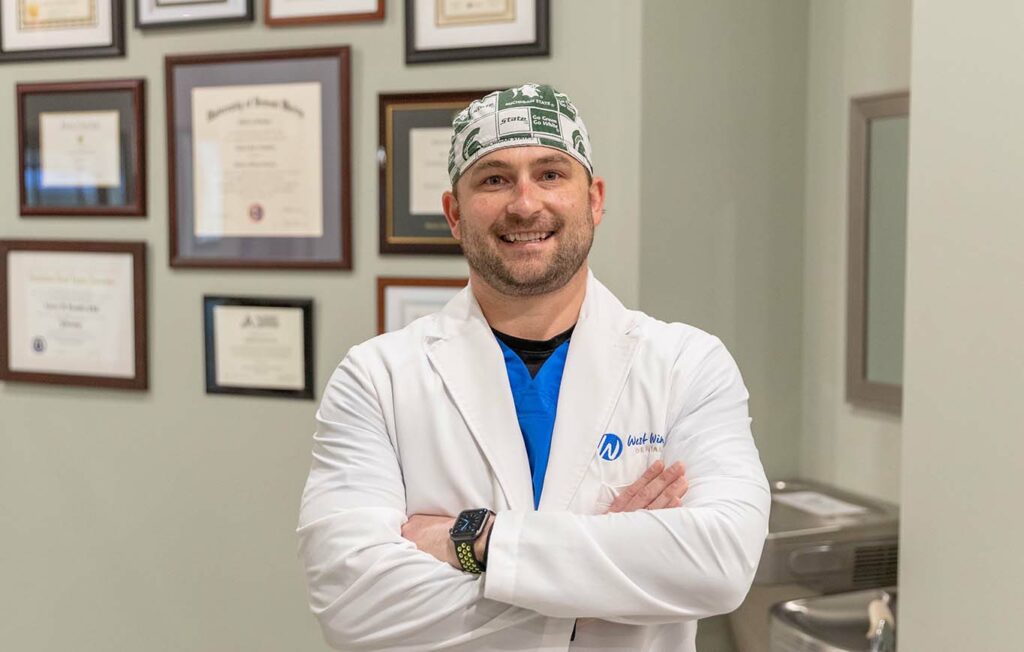
Dr. Andrew Hamilton, DDS, FAGD
Dr. Hamilton is an active member of several professional organizations including the American Dental Association (ADA), the Michigan Dental Association (MDA), the Kalamazoo Valley District Dental Society (KVDDS), the American Academy of Implant dentistry (AAID), the International Academy of Facial Aesthetics (IAFA) and also attends courses with the Pikos Institute in Northwest Florida. He is a member of the International Congress of Oral Implantologists (ICIO), has achieved fellowship status in the International Dental Implant Association (IDIA) and in the Academy of General Dentistry (FAGD), has graduated from and is an alumnus of the Kois Center program in Seattle, and is on the faculty of the Global Dental Implant Academy (GDIA).
The little spare time left over is spent Steelhead and Salmon fishing and the occasional round of golf.